Tag: finance

  • BNK Financial Group files trademarks related to Korean Won-based stablecoins

    BNK Financial Group (Chairman Dae-in Bin) announced on Friday, July 4, that BNK Financial Holdings and its subsidiaries, Busan Bank and Kyongnam Bank, have filed trademark applications related to Korean Won(KRW)-based stablecoins.

    Currently, the most widely used stablecoins in the market are U.S. dollar-backed, based on U.S. Treasury bonds and deposits. These are commonly used for borderless payments, remittances, and as a store of value in digital asset transactions. As a result, concerns have arisen that such dominance could diminish the domestic utility of the KRW.
    In response, the banking sector is taking joint action to ensure domestic financial stability and gain a first-mover advantage by pioneering the KRW-based stablecoin market.

    As part of this initiative, BNK Financial Holdings has filed a total of 11 trademark applications for stablecoin names intended for use by its subsidiaries or fintech partners. Separately, Busan Bank has filed 10 applications and Kyongnam Bank has filed 4, both aiming to issue bank-led stablecoins.

    Additionally, Busan Bank and Kyongnam Bank have formally joined the Stablecoin Division of the Open Blockchain DID Association (OBDIA), the preparatory organization for bank-issued stablecoins. They will actively participate in joint research on stablecoins with major financial institutions.

    The Open Blockchain DID Association is also collaborating with 11 banks and the Korea Financial Telecommunications and Clearings Institute (KFTC) to establish a joint venture for issuing bank-backed stablecoins.

    Through this wave of trademark filings, BNK Financial Group anticipates that BNK Holdings, Busan Bank, and Kyongnam Bank will each play a strategic role in building infrastructure for the digital asset ecosystem, leveraging their respective strengths.

    BNK Financial Group stated that stablecoins are expected to serve as a starting point for the advancement of the digital asset market, and that it will continue to prepare a detailed market entry timeline and execution strategy through close communication with major financial institutions.
  • Bodyfriend sees momentum in B2G sector: First-half performance up 22.3% year-on-year

    Bodyfriend sees momentum in B2G sector: First-half performance up 22.3% year-on-year

    • B2G sales rise at police stations, fire departments, and senior centers in H1
    • Sales to police and fire departments increase more than fivefold from previous year, reaffirming benefits of massage chairs for institutions and public agencies

    Healthcare robot company Bodyfriend (CEOs Ji Sung-kyu and Kim Heung-seok) reported a 22.3% year-on-year increase in its B2G (business-to-government) sales for the first half of this year, driven by strong supply of massage chairs to public institutions, police stations, fire departments, and senior centers.

    Bodyfriend has recently expanded its massage chair business from B2B to B2G, and as of the first half of 2025, B2G revenue rose by 22.3% compared to the same period last year. Sales breakdown by sector showed a relatively even distribution: public institutions accounted for 38%, senior centers 32%, and police and fire departments 30%.

    Among these, sales to police and fire departments have grown steadily for three consecutive years since 2022. In the first half of this year, revenue from this segment surged more than fivefold from the previous year, marking the highest sales to date. This performance reflects Bodyfriend’s strategic targeting of the latent demand for massage chairs as a much-needed support measure for police officers and firefighters who have limited access to rest due to heavy workloads, backed by the company’s competitive edge in healthcare robot technology.

    Orders from senior centers also stood out. In the first half of this year, Bodyfriend won several large-scale contracts through competitive bidding. In June, the company signed a supply agreement to deliver 74 massage chairs to senior centers in Seoul’s Seodaemun District. Sales to other public institutions, such as city halls and public corporations, have also seen consecutive annual growth since 2023.

    The company attributes this growth to a positive cycle: after government agencies, local governments, and public organizations introduced Bodyfriend’s healthcare robots, measurable improvements were seen in employee welfare satisfaction and work productivity. These results have prompted more institutions to seek out Bodyfriend’s products on their own.

    Bodyfriend stated that its healthcare robots—now becoming a new standard for everyday wellness—are rapidly expanding beyond private households and businesses into the public sector, making “everyday healthcare through massage” a reality. The company aims to continue delivering meaningful results in the B2G sector by leveraging its product capabilities and brand competitiveness to ensure people in need of healing can access Bodyfriend’s healthcare robots anywhere.

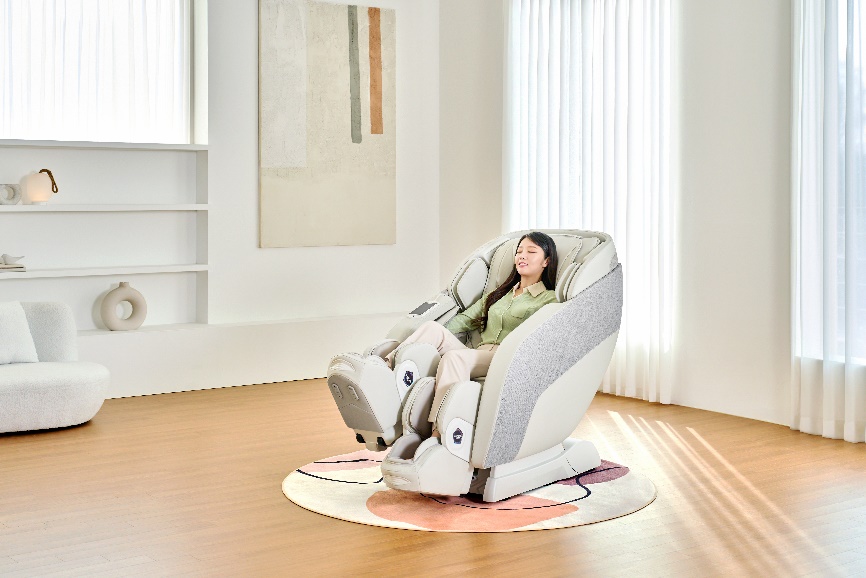
    Bodyfriend’s “healthcare robot” goes beyond the limitations of conventional massage chairs. Equipped with robotics technology, it enables a true full-body massage experience. By independently operating the massage components for arms and legs, the robot helps coordinate core and other muscle groups throughout the body. The industry has praised the product for redefining the standard of massage chairs through its innovative whole-body stimulation technology.